When Communications Fail, Preparation Matters
A real-world example of why EVCNB prepares multiple ways to communicate during an emergency
Emergency preparedness can sometimes feel theoretical. We talk about communications failures, redundant systems and practicing with emergency equipment in case the day comes when we actually need it.
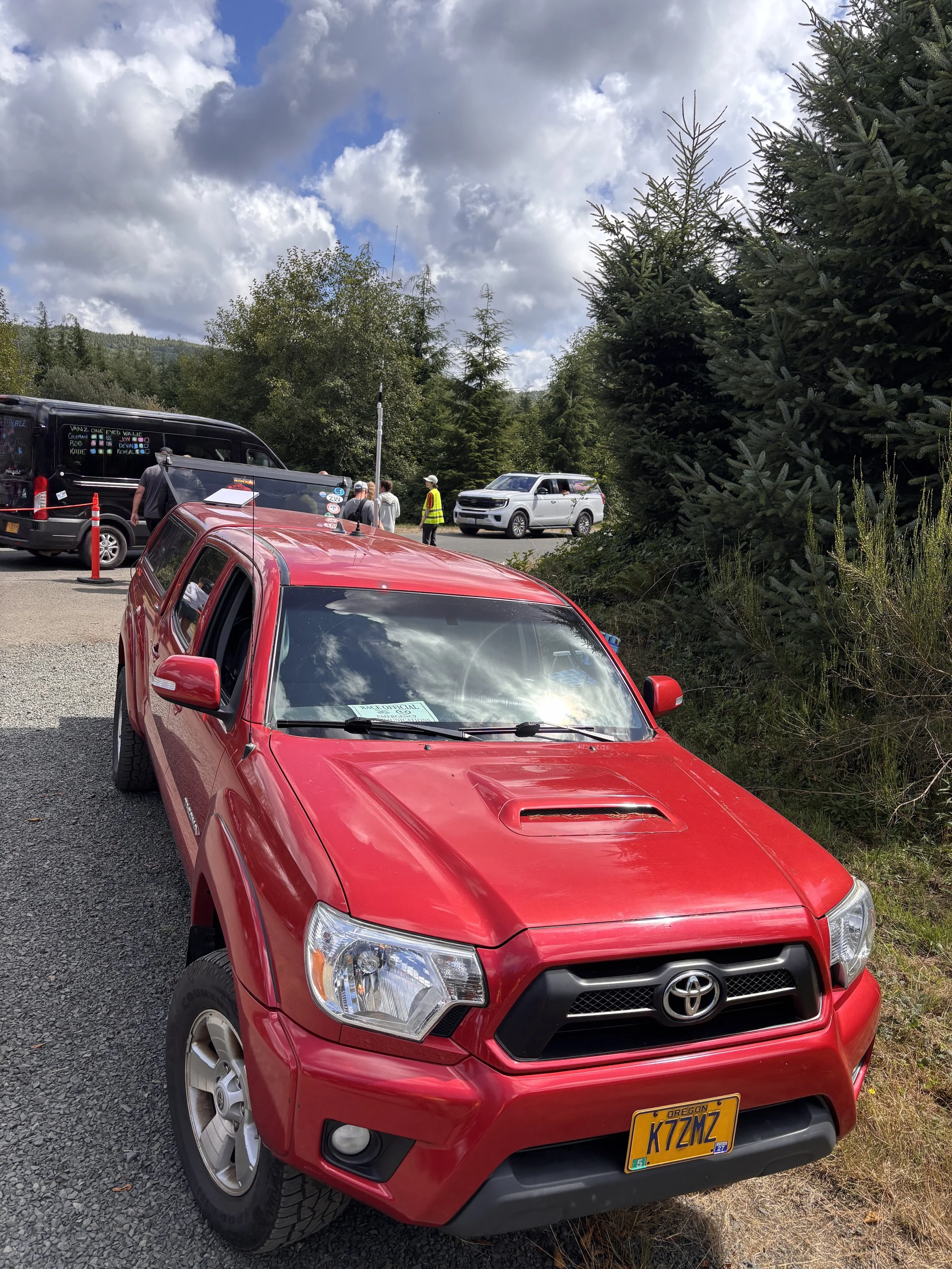
EVCNB communications volunteer John Beaston deployed an emergency radio kit and Starlink Mini while supporting the Hood to Coast Relay at a remote exchange point east of Seaside.
Last weekend, one of EVCNB’s communications volunteers got a chance to put that preparation to work in a very real situation.
EVCNB volunteer John Beaston was providing radio communications support for the Hood to Coast Relay at an exchange point in the hills east of Seaside. Knowing that communications could be challenging in the area, John brought along an emergency radio communications kit as well as a Starlink Mini satellite internet terminal.
That turned out to be a very good decision.
Cellular coverage at the exchange was extremely poor. Even some public-service radios were unable to reach their normal repeaters. Starlink provided an internet connection — even operating in its low-speed Standby Mode — and John shared Wi-Fi access with event personnel and runners who had urgent communication needs.
Then the situation became more serious.
During the event, John helped handle two separate medical emergencies involving chest pain and difficulty breathing. Attempts to make emergency calls using Wi-Fi calling over Starlink were unsuccessful, possibly because the cellular network itself was overloaded.
But there was another communications path available.
The amateur radio network was working.
Using Clatsop County’s AuxComm ham radio linked repeater system, the emergency calls were relayed to the Clatsop County Emergency Operations Center and then to fire and ambulance responders. Emergency vehicles arrived at the exchange point in less than five minutes. One individual was subsequently transported by ambulance to Seaside.
The experience illustrates an important principle of emergency preparedness: there may not be one communications system that works when everything else fails. The answer is having several options.
Cellular phones are usually our first choice. Satellite internet can provide another connection when terrestrial infrastructure is unavailable. Amateur radio offers yet another independent communications path. Each has strengths and limitations, and during a disaster we may need all of them.
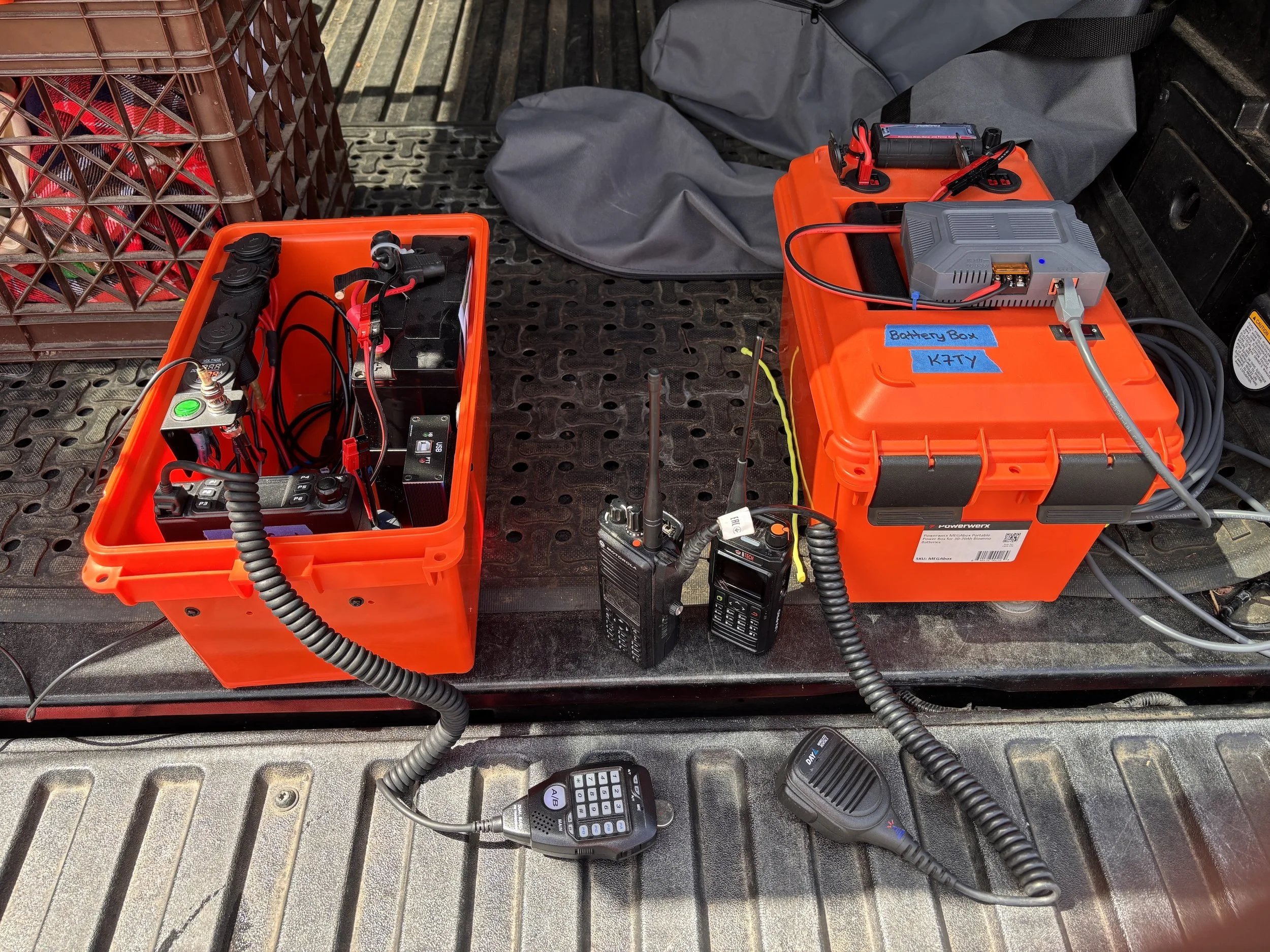
Multiple communications options — including amateur radio, portable power and satellite internet — provided redundancy when normal cellular and public-safety communications were limited.
It also demonstrates why EVCNB volunteers train and why we take equipment into the field rather than simply storing it for an emergency.
As John put it:
“There’s nothing like handling real-world situations to practice emergency response.”
Exactly.
A major earthquake or other regional disaster on the North Coast could disrupt cellular networks, internet service, power and normal public-safety communications simultaneously. We cannot know in advance which systems will remain available.
What we can do is prepare multiple ways to communicate, learn how to use them, and practice before the emergency happens.
Sometimes preparedness is a radio kit and a satellite terminal sitting in the back of a pickup.
And sometimes that preparation helps get an ambulance to someone in less than five minutes.